ADPKD
Autosomal dominant polycystic kidney disease overview, diagnosis, family screening, and monitoring.
KidGene brings together clinical assessment, genetic counseling, family screening, long-term monitoring, and research for patients and families affected by inherited kidney disease.
Many inherited kidney diseases are underdiagnosed. Early recognition can help protect patients and families through appropriate diagnosis, monitoring, and counseling.

Striving for excellence in clinical service, education and research in genetic nephrology.
The homepage routes patients, families, doctors, learners, researchers, and donors to the right journey without feeling crowded.
Learn who should visit, what to prepare, and what care may involve.
Understand family screening, inheritance, counseling, and long-term planning.
Referral indications, required documents, and clinical tools.
Patient-friendly disease information and genetic testing basics.
Support diagnosis, education, counseling, awareness, and research.
The center integrates clinical nephrology, laboratory genetics, and clinical genetics to deliver comprehensive, patient-centered care for individuals and families with inherited kidney disease.
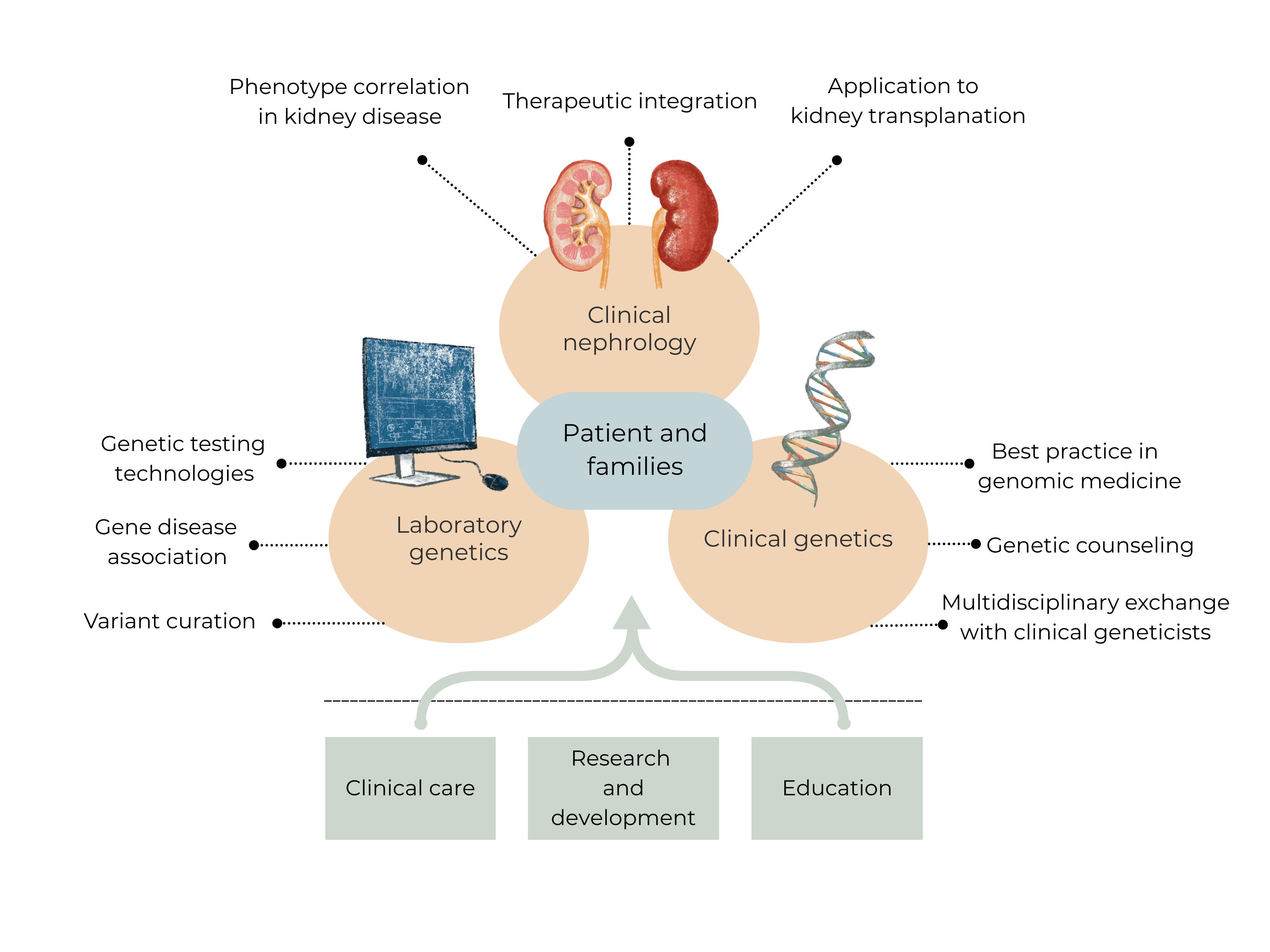
This section should feel calm, reassuring, and practical, with simple language for patients and families.
Patient is referred by a physician or contacts the center.
Medical history, family history, laboratory review, imaging review, and examination.
Explanation of possible benefits, limitations, risks, family implications, and consent.
Gene panel, exome, genome, or copy-number analysis may be considered when appropriate.
Long-term plan for the patient and relatives who may benefit from screening or counseling.
Key information on inherited kidney diseases — symptoms, diagnosis, and care guidance for patients and families.
Use short pages first, then expand into bilingual handouts, videos, FAQs, and patient stories after approval.
Autosomal dominant polycystic kidney disease overview, diagnosis, family screening, and monitoring.
Kidney, hearing, and eye features with inheritance patterns and family evaluation.
Rare multisystem disease with kidney involvement and treatment implications.
Congenital anomalies of the kidney and urinary tract with genetic considerations.
Inherited tubular disorders affecting salt, mineral, acid-base, and water balance.
Genetic forms of focal segmental glomerulosclerosis and implications for care.
Explain genetic testing in plain language, including what it can and cannot answer, why counseling matters, and how results may affect family members.
Physician pages should be concise, clinically structured, and optimized for fast referral decisions.
Recommended launch content: referral indications, clinic schedule, required documents, prior labs, imaging, pedigree, and consent process.
Research pages can later include registry information, participation criteria, collaboration routes, publications, and ongoing studies.
KidGene can position itself as a center that transforms clinical care into better understanding of inherited kidney disease in Thailand and the region.
Donation messaging should feel transparent, dignified, and institutional. Add official payment details and policies only after hospital approval.
Visit us at Siriraj Hospital or reach out by email or phone for appointments and inquiries.